Hi Nurie Emrullai, what`s your routine at the moment?
I think that what I do is no longer a routine, but my choice of how my life is created… Like coffee and constant reading.
For the last two years I have been dealing with my doctoral study on exile, nostalgia and identity from a literary prism that includes many poets, prose writers and essayists mainly who still write on this topic. Then there is the other side of my creativity, poetry…
What`s now particularly important for all of us?
I think it is important not to lose the sense of time, especially the present. Our life is so dynamic that we often have to follow the dates and days as if they are slipping out of our hands and long ago a day was like a year, while now time flies. To enjoy the things of the moment, to be one with everything that surrounds us. Let’s not become strangers to the phenomenons that surround us, let’s not be indifferent to the things that happen to the people around us, but even more widely. I think if we all become more vocal, even within the circle we live in, we can change a lot of things and make the Earth a more livable place.
New start, new beginning. What will be essential and which roles will literature, art play on society?
Recently I read the work Brave new World by Aldous Huxley. A work that gives you thrills until the last moment, that leads you to fight with the protagonist. The fight between human and inhuman. Literature and science. Where Shakespeare was denied and many other writers, that we may say that the world is built with their prototypes. What I mean is that in a lover we always see a little Romeo or Juliet, or in an injustice we look for a Hamlet, or in a girl we meet the features of a sad Ophelia… even the world around us is used to see it through the word, to identify it through the word and sound, of course, our feelings, emotions are all carried by the word. Now a world is being built that will take everything over and simply man should not worry about the basics. There is a silent war between technology and art. Big questions are being created in people’s heads. But those who know the history know very well that art is in our genetics and it cannot never be eradicated. There will always be a musical note, a cry as Emil Cioran says that even the scream is the earliest form of poetry, of lyric.
What are you reading currently?
These summer days have been intense and usable for various readings. I read Madame Bovary by Flaubert with a new and wonderful translation from the original in Albanian language by Urim Nerguti and after finishing Zorba the Geek by Nikos Kanzantzakis, I have just started one of his works with a translation by Romeo Çollaku, The poor man of God. So I’m choosing beautiful prose from writers of different cultures.
Which quote, text will you propose to us?
Tell me what you do with the food you eat, and I’ll tell you who you are. Some turn their food into fat and manure, some into work and good humor, and others, I’m told, into God. So there must be three sorts of men. I’m not one of the worst, boss, nor yet one of the best. I’m somewhere in between the two. What I eat I turn into work and good humor. That’s not too bad, after all!‘
He looked at me wickedly and started laughing.
‚As for you, boss,‘ he said, ‚I think you do your level best to turn what you eat into God. But you can’t quite manage it, and that torments you. The same thing’s happening to you as happened to the crow.‘
‚What happened to the crow, Zorba?‘
‚Well, you see, he used to walk respectably, properly – well, like a crow. But one day he got it into his head to try and strut about like a pigeon. And from that time on the poor fellow couldn’t for the life of him recall his own way of walking. He was all mixed up, don’t you see? He just hobbled about.
*
No, you’re not free,“ he said. „The string you’re tied to is perhaps no longer than other people’s. That’s all. You’re on a long piece of string, boss; you come and go, and think you’re free, but you never cut the string in two. And when people don’t cut that string . . .“
„I’ll cut it some day!“ I said defiantly, because Zorba’s words had touched an open wound in me and hurt.
„It’s difficult, boss, very difficult. You need a touch of folly to do that; folly, d’you see? You have to risk everything! But you’ve got such a strong head, it’ll always get the better of you. A man’s head is like a grocer; it keeps accounts: I’ve paid so much and earned so much and that means a profit of this much or a loss of that much! The head’s a careful little shopkeeper; it never risks all it has, always keeps something in reserve. It never breaks the string. Ah no! It hangs on tight to it, the bastard! If the string slips out of its grasp, the head, poor devil, is lost, finished! But if a man doesn’t break the string, tell me, what flavor is left in life? The flavor of camomile, weak camomile tea! Nothing like rum-that makes you see life inside out!
Zorba the Greek, Nikos Kazantzakis
Thank you very much for the interview, dear Nurie, joy and success for your great literature projects – all the best for you!
5 questions on artist: Nurie Emrullai, poet
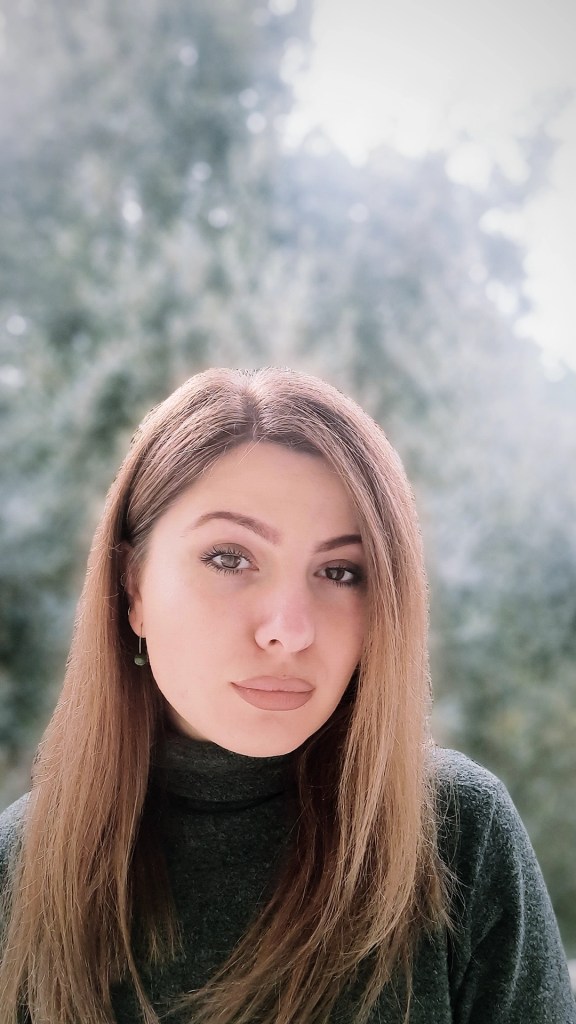
Foto_privat.
12.8.2024_Interview_Walter Pobaschnig. Das Interview wurde online geführt.
 Literatur outdoors - Worte sind Wege